Buying your first e-bike is exciting — until you see the spec sheets. Watts, watt-hours, torque sensors, mid-drives, Class 1/2/3… it’s enough to make anyone close the tab and give up. This guide cuts through the jargon and walks you through exactly how to choose an electric bike that fits your body, your roads, and your budget.
Step 1: Decide What You’ll Actually Use It For
Every e-bike decision starts here. A bike that’s perfect for a 5-mile city commute can be miserable on a gravel trail, and vice versa. Be honest about your most common ride:
- Commuting — you want reliability, fenders, a rack, and enough battery to cover your round trip without daily charging. Our roundup of the best electric bikes for commuting covers exactly this scenario.
- Trail riding and off-road — fat tires, suspension, and a torquey motor matter more than speed.
- Casual exercise and fun — comfort frames and upright riding positions win.
- Errands and cargo — long-wheelbase cargo e-bikes with heavy racks handle groceries, kids, and pets.
If you ride mixed terrain, a hybrid-style e-bike with medium-width tires is usually the safest all-rounder. For a broad look at all the top choices in one place, see our best electric bikes for adults guide.
Step 2: Pick the Right Motor
The motor is the heart of the bike. Two things matter: where it sits and how much power it makes.
Hub motors (in the wheel) are the most common on affordable e-bikes. They’re quiet, simple, and fine for flat cities and gentle hills. Mid-drive motors (at the pedals, driving the chain) climb much better because they work through the bike’s gears — but they cost more.
Power is measured in watts: 250W is the legal baseline in many places, 500–750W is the sweet spot for most American riders, and anything past 750W gets into e-moto territory with legal trade-offs. Torque (in Newton-meters) matters more than watts on hills — look for 50 Nm or more if your route has real climbs. For a deeper dive into how motors and sensors shape the ride, read our beginner’s guide to how electric bikes work.
Step 3: Get Enough Battery — Then Add 20%
Battery capacity is measured in watt-hours (Wh). Bigger Wh means more range:
- 300–400 Wh: enough for short commutes under 10 miles each way
- 500–700 Wh: the sweet spot for most riders, 30–60 miles of real-world range
- 700+ Wh: long rides, heavy cargo, or riders who hate charging
One rule of thumb saves buyers from disappointment: take the manufacturer’s best-case range claim and knock off about 20%. Real hills, headwinds, cold weather, and rider weight all eat into the number. If you’ll rarely charge mid-ride, buy a little more battery than you think you need — batteries also slowly lose capacity over hundreds of charge cycles.
A removable battery is worth prioritizing. You can charge it indoors at your desk or in your apartment, and take it with you to deter theft.
Step 4: Know the E-Bike Classes
In the US, e-bikes fall into three classes, and local rules differ:
- Class 1: pedal-assist only, cuts out at 20 mph
- Class 2: throttle + pedal assist, cuts out at 20 mph
- Class 3: pedal-assist only, cuts out at 28 mph (often no throttle)
Class 1 and 2 bikes are allowed nearly everywhere bicycles go. Class 3 bikes face restrictions on some trails and paths. If you’ll ride multi-use trails, Class 1 or 2 keeps life simple. If you’re mainly on roads and want the fastest legal commute, Class 3 is the pick. Check your city and state rules before buying — a two-minute search saves real headaches.
Step 5: Choose a Frame That Fits Your Life
Step-through frames (no high top tube) are easy to mount, especially in work clothes or with stiff knees. Step-over frames feel more rigid and sporty. Neither is better — it’s about your flexibility and how you’ll use the bike.
Also think about storage: if you live in an apartment, a folding e-bike or a quick-release battery and handlebar setup can be the difference between riding daily and never taking it out of the garage. Weight matters too — a 70-pound e-bike is no joke on stairs.
Step 6: Don’t Skip the Ride-Quality Details
Specs sell bikes, but these small things decide whether you love yours:
- Sensor type: torque sensors feel natural and responsive; cadence sensors (cheaper) feel more on/off. If you can test ride, feel the difference.
- Brakes: hydraulic disc brakes stop noticeably better than mechanical ones, especially in rain or on hills. Worth paying for.
- Gears: a 7- or 8-speed drivetrain plus motor power handles almost everything; you don’t need 21 speeds.
- Tires: wider tires (2.5″–4″) add comfort and grip but roll slower; narrower ones are faster on pavement.
- Warranty and support: a two-year warranty and a company that answers the phone beats a bargain from a mystery brand with no support.
Step 7: Set a Realistic Budget
Here’s what the money gets you in 2026:
- Under $800: solid commuter and fat-tire e-bikes, hub motors, cadence sensors. Great value if you pick a brand with real support.
- $800–$1,500: better batteries, hydraulic brakes, torque sensors on some models, nicer frames.
- $1,500–$3,000: mid-drive motors, premium components, long-range batteries.
- $3,000+: big-name bike brands, the smoothest rides, dealer service networks.
More expensive doesn’t always mean better for you. A $700 hub-motor bike you’ll ride every day beats a $3,000 garage ornament.
The Short Version: A 5-Minute Checklist
- Match the bike to your most common ride (commute, trails, or errands).
- Choose hub motor for flats and value, mid-drive for hills and performance.
- Get 500+ Wh of battery and discount the advertised range by 20%.
- Pick the right class for where you’ll ride (Class 1/2 for trails, Class 3 for fast commutes).
- Fit the frame to your body and your storage situation.
- Prioritize hydraulic brakes and a removable battery.
- Buy from a brand with a real warranty and reachable support.
Follow those seven steps and you’ll land on a bike you’re still happy with two years from now — not one you wish you’d researched better.
Frequently Asked Questions
What size electric bike do I need?
Most adult e-bikes come in one or two frame sizes plus an adjustable seat post and handlebars. General rule: stand over the frame — with a step-over you want an inch or two of clearance; with a step-through, it matters less. If you’re between sizes, the smaller one usually handles more nimbly.
Is a 500W or 750W e-bike better for a beginner?
Either is fine. 500W suits flat-to-rolling terrain and lighter riders; 750W gives more confidence on hills and headwinds. Focus more on torque (50+ Nm) than the watt number — it tells you more about hill-climbing ability.
How long does an e-bike battery last?
The pack typically lasts 3–5 years or several hundred full charge cycles before capacity drops noticeably. Store it at room temperature, don’t leave it fully charged for weeks unused, and you can replace the pack rather than the whole bike.
Should I buy a throttle e-bike?
If pulling away from stops, starting on hills, or riding without pedaling sometimes appeals to you, yes — a Class 2 throttle is genuinely useful and costs little extra. Pure pedal-assist bikes feel more like traditional cycling and are simpler. Neither choice is wrong.
Can I test ride an e-bike before buying?
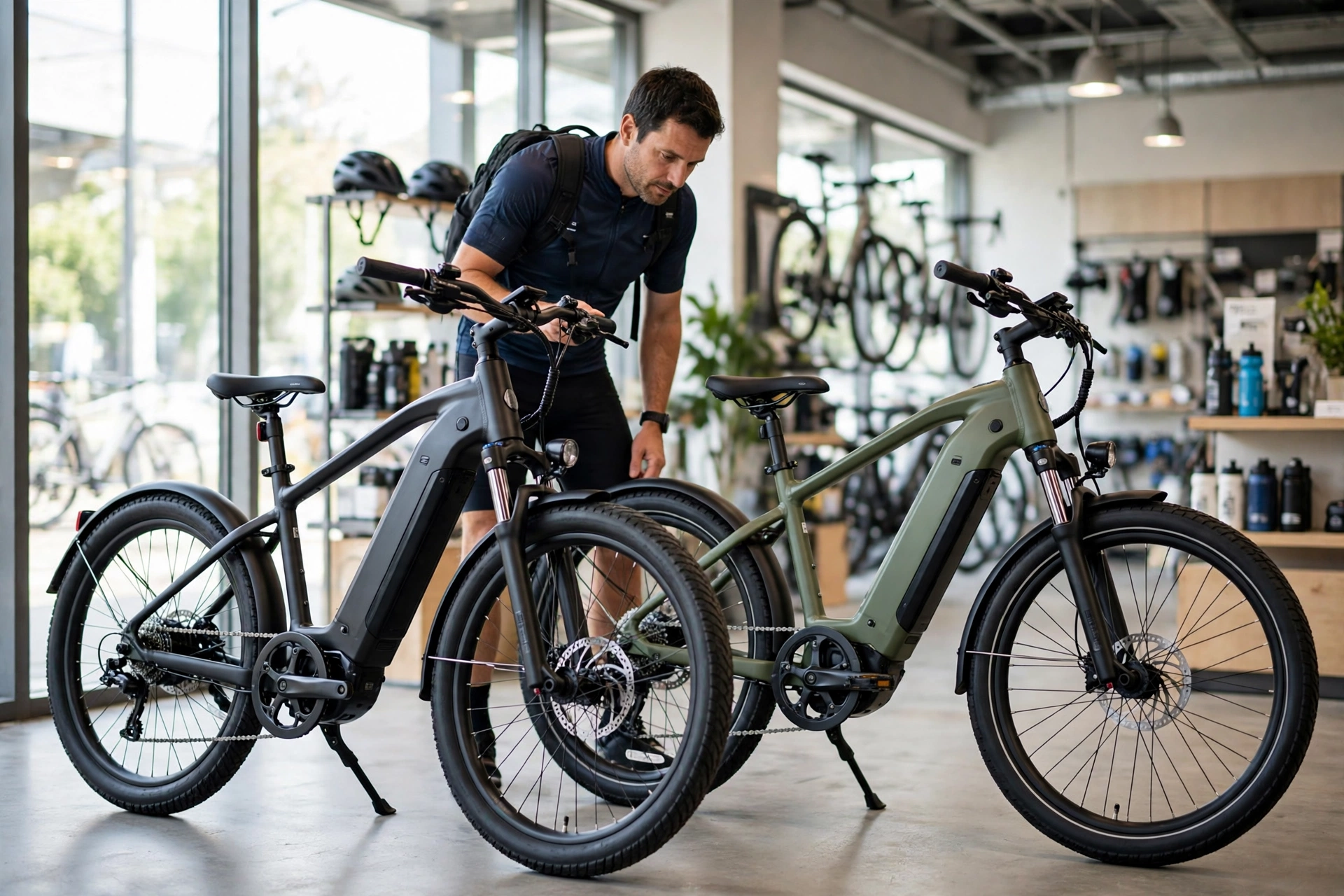
Yes — and you should if possible. Local bike shops carry mid-range and premium brands, and even a 10-minute ride reveals how the sensor, motor noise, and geometry feel. For online-only budget brands, watch owner video reviews and check the return policy before ordering.
Leave a Reply