Category: Blog

  • How to Choose an Electric Bike: A Practical Buyer’s Guide (2026)

    How to Choose an Electric Bike: A Practical Buyer’s Guide (2026)

    Buying your first e-bike is exciting — until you see the spec sheets. Watts, watt-hours, torque sensors, mid-drives, Class 1/2/3… it’s enough to make anyone close the tab and give up. This guide cuts through the jargon and walks you through exactly how to choose an electric bike that fits your body, your roads, and your budget.

    Step 1: Decide What You’ll Actually Use It For

    Every e-bike decision starts here. A bike that’s perfect for a 5-mile city commute can be miserable on a gravel trail, and vice versa. Be honest about your most common ride:

    • Commuting — you want reliability, fenders, a rack, and enough battery to cover your round trip without daily charging. Our roundup of the best electric bikes for commuting covers exactly this scenario.
    • Trail riding and off-road — fat tires, suspension, and a torquey motor matter more than speed.
    • Casual exercise and fun — comfort frames and upright riding positions win.
    • Errands and cargo — long-wheelbase cargo e-bikes with heavy racks handle groceries, kids, and pets.

    If you ride mixed terrain, a hybrid-style e-bike with medium-width tires is usually the safest all-rounder. For a broad look at all the top choices in one place, see our best electric bikes for adults guide.

    Step 2: Pick the Right Motor

    The motor is the heart of the bike. Two things matter: where it sits and how much power it makes.

    Hub motors (in the wheel) are the most common on affordable e-bikes. They’re quiet, simple, and fine for flat cities and gentle hills. Mid-drive motors (at the pedals, driving the chain) climb much better because they work through the bike’s gears — but they cost more.

    Power is measured in watts: 250W is the legal baseline in many places, 500–750W is the sweet spot for most American riders, and anything past 750W gets into e-moto territory with legal trade-offs. Torque (in Newton-meters) matters more than watts on hills — look for 50 Nm or more if your route has real climbs. For a deeper dive into how motors and sensors shape the ride, read our beginner’s guide to how electric bikes work.

    Step 3: Get Enough Battery — Then Add 20%

    Battery capacity is measured in watt-hours (Wh). Bigger Wh means more range:

    • 300–400 Wh: enough for short commutes under 10 miles each way
    • 500–700 Wh: the sweet spot for most riders, 30–60 miles of real-world range
    • 700+ Wh: long rides, heavy cargo, or riders who hate charging

    One rule of thumb saves buyers from disappointment: take the manufacturer’s best-case range claim and knock off about 20%. Real hills, headwinds, cold weather, and rider weight all eat into the number. If you’ll rarely charge mid-ride, buy a little more battery than you think you need — batteries also slowly lose capacity over hundreds of charge cycles.

    A removable battery is worth prioritizing. You can charge it indoors at your desk or in your apartment, and take it with you to deter theft.

    Step 4: Know the E-Bike Classes

    In the US, e-bikes fall into three classes, and local rules differ:

    • Class 1: pedal-assist only, cuts out at 20 mph
    • Class 2: throttle + pedal assist, cuts out at 20 mph
    • Class 3: pedal-assist only, cuts out at 28 mph (often no throttle)

    Class 1 and 2 bikes are allowed nearly everywhere bicycles go. Class 3 bikes face restrictions on some trails and paths. If you’ll ride multi-use trails, Class 1 or 2 keeps life simple. If you’re mainly on roads and want the fastest legal commute, Class 3 is the pick. Check your city and state rules before buying — a two-minute search saves real headaches.

    Step 5: Choose a Frame That Fits Your Life

    Step-through frames (no high top tube) are easy to mount, especially in work clothes or with stiff knees. Step-over frames feel more rigid and sporty. Neither is better — it’s about your flexibility and how you’ll use the bike.

    Also think about storage: if you live in an apartment, a folding e-bike or a quick-release battery and handlebar setup can be the difference between riding daily and never taking it out of the garage. Weight matters too — a 70-pound e-bike is no joke on stairs.

    Step 6: Don’t Skip the Ride-Quality Details

    Specs sell bikes, but these small things decide whether you love yours:

    • Sensor type: torque sensors feel natural and responsive; cadence sensors (cheaper) feel more on/off. If you can test ride, feel the difference.
    • Brakes: hydraulic disc brakes stop noticeably better than mechanical ones, especially in rain or on hills. Worth paying for.
    • Gears: a 7- or 8-speed drivetrain plus motor power handles almost everything; you don’t need 21 speeds.
    • Tires: wider tires (2.5″–4″) add comfort and grip but roll slower; narrower ones are faster on pavement.
    • Warranty and support: a two-year warranty and a company that answers the phone beats a bargain from a mystery brand with no support.

    Step 7: Set a Realistic Budget

    Here’s what the money gets you in 2026:

    • Under $800: solid commuter and fat-tire e-bikes, hub motors, cadence sensors. Great value if you pick a brand with real support.
    • $800–$1,500: better batteries, hydraulic brakes, torque sensors on some models, nicer frames.
    • $1,500–$3,000: mid-drive motors, premium components, long-range batteries.
    • $3,000+: big-name bike brands, the smoothest rides, dealer service networks.

    More expensive doesn’t always mean better for you. A $700 hub-motor bike you’ll ride every day beats a $3,000 garage ornament.

    The Short Version: A 5-Minute Checklist

    1. Match the bike to your most common ride (commute, trails, or errands).
    2. Choose hub motor for flats and value, mid-drive for hills and performance.
    3. Get 500+ Wh of battery and discount the advertised range by 20%.
    4. Pick the right class for where you’ll ride (Class 1/2 for trails, Class 3 for fast commutes).
    5. Fit the frame to your body and your storage situation.
    6. Prioritize hydraulic brakes and a removable battery.
    7. Buy from a brand with a real warranty and reachable support.

    Follow those seven steps and you’ll land on a bike you’re still happy with two years from now — not one you wish you’d researched better.

    Frequently Asked Questions

    What size electric bike do I need?
    Most adult e-bikes come in one or two frame sizes plus an adjustable seat post and handlebars. General rule: stand over the frame — with a step-over you want an inch or two of clearance; with a step-through, it matters less. If you’re between sizes, the smaller one usually handles more nimbly.

    Is a 500W or 750W e-bike better for a beginner?
    Either is fine. 500W suits flat-to-rolling terrain and lighter riders; 750W gives more confidence on hills and headwinds. Focus more on torque (50+ Nm) than the watt number — it tells you more about hill-climbing ability.

    How long does an e-bike battery last?
    The pack typically lasts 3–5 years or several hundred full charge cycles before capacity drops noticeably. Store it at room temperature, don’t leave it fully charged for weeks unused, and you can replace the pack rather than the whole bike.

    Should I buy a throttle e-bike?
    If pulling away from stops, starting on hills, or riding without pedaling sometimes appeals to you, yes — a Class 2 throttle is genuinely useful and costs little extra. Pure pedal-assist bikes feel more like traditional cycling and are simpler. Neither choice is wrong.

    Can I test ride an e-bike before buying?
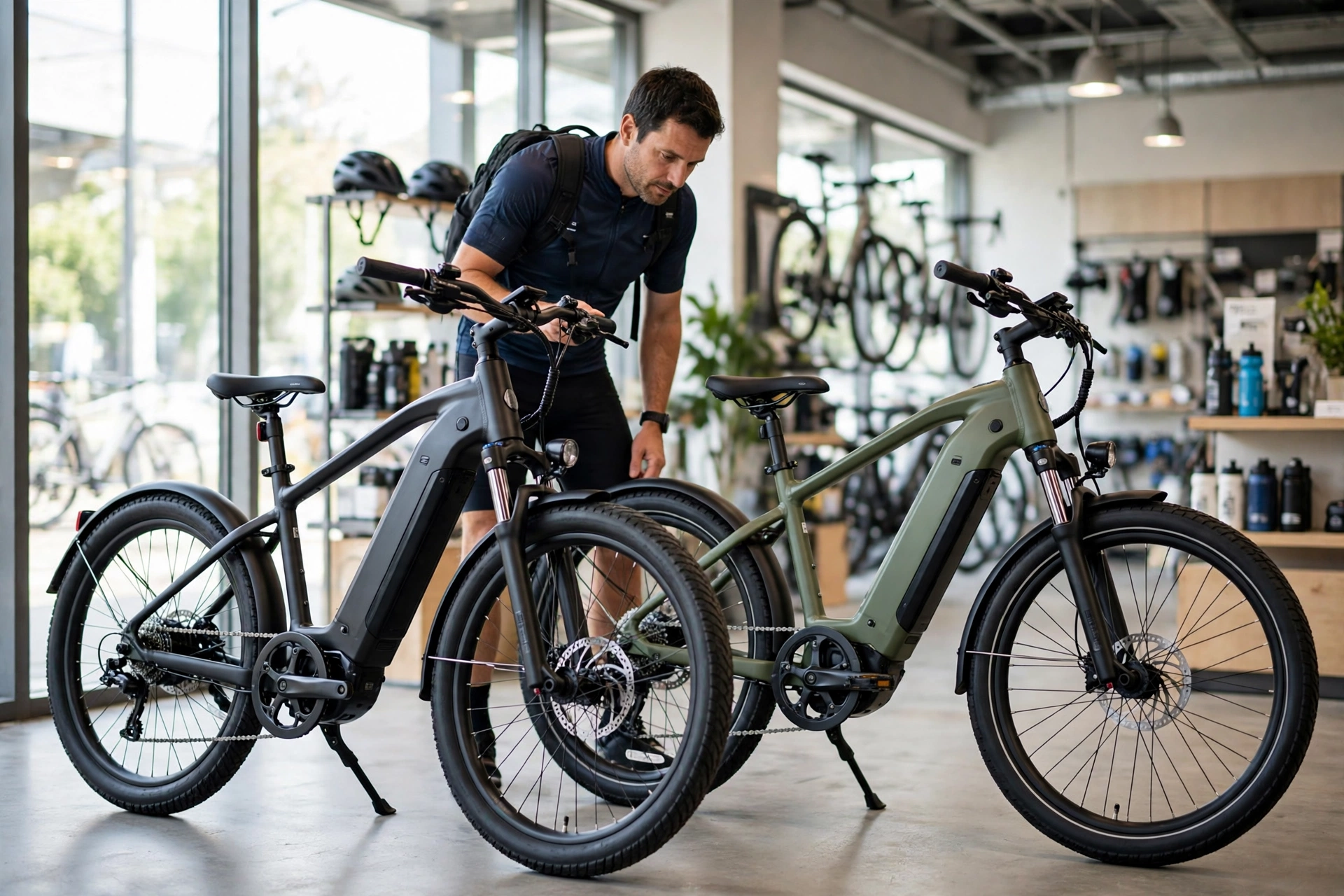
    Yes — and you should if possible. Local bike shops carry mid-range and premium brands, and even a 10-minute ride reveals how the sensor, motor noise, and geometry feel. For online-only budget brands, watch owner video reviews and check the return policy before ordering.
  • How Do Electric Bikes Work? A Beginner’s Guide

    How Do Electric Bikes Work? A Beginner’s Guide

    An electric bike is a regular bicycle with three extra parts: a motor, a battery, and a controller that connects the two. When you pedal (or press a throttle), the controller tells the motor to add power from the battery, giving your legs a helping push. That’s the whole idea — everything else is details about how that push is delivered.

    How Does the Motor on an E-Bike Work?

    The motor converts electrical energy from the battery into forward motion. Most adult e-bikes use one of two motor types, and the difference shapes how the bike feels.

    Hub motors sit in the center of the front or rear wheel. They’re the most common type on affordable e-bikes because they’re simple, quiet, and cheap to build. A hub motor pushes the wheel directly, which gives a sensation a bit like being gently towed forward — smooth, but slightly disconnected from your pedaling. They work well on flat ground and mild hills but can feel sluggish on steep climbs.

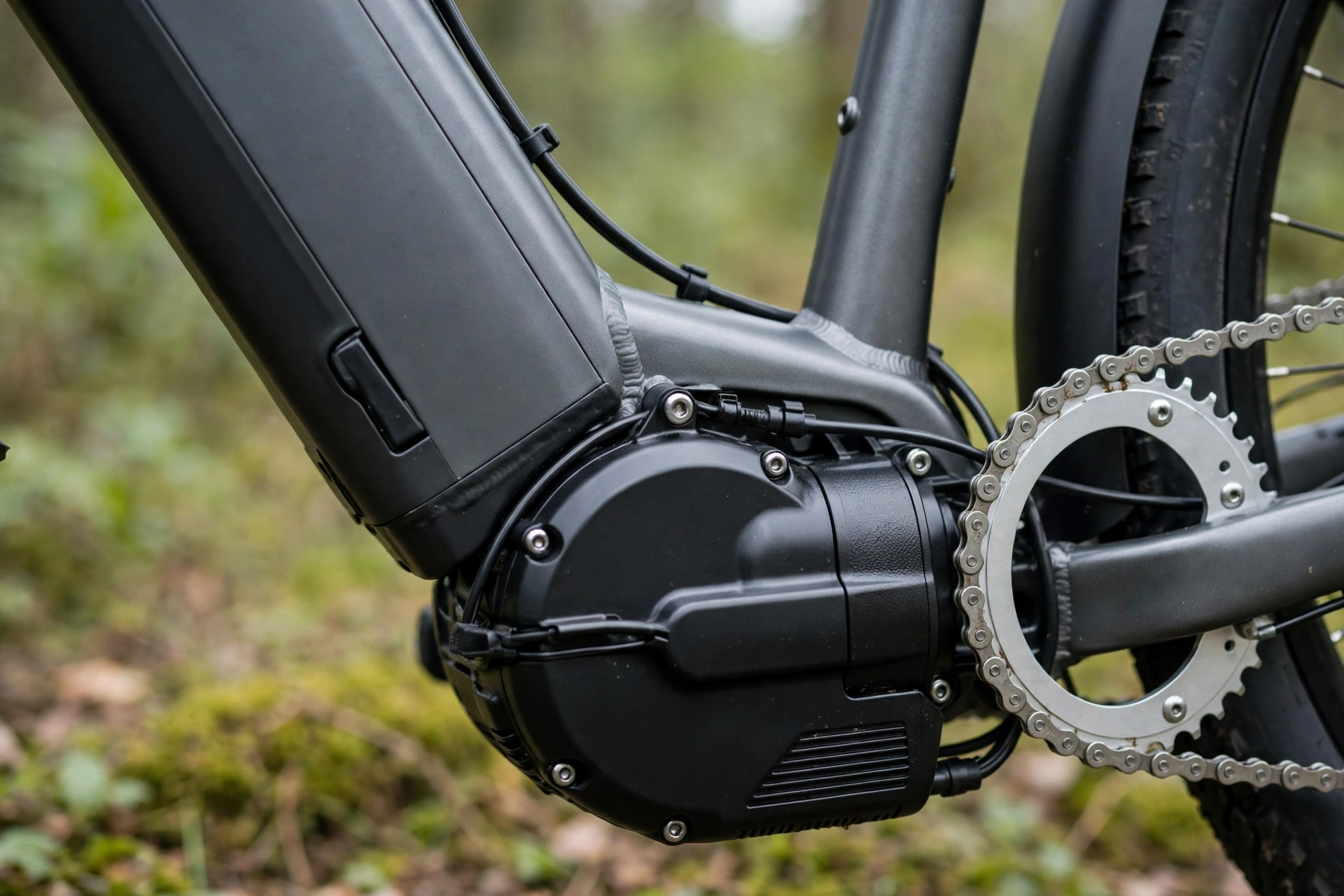
    Mid-drive motors sit at the bottom bracket, where the pedals are, and drive the bike’s chain. Because they work through the gears, they handle hills much better. The trade-off is price and a bit more mechanical complexity. Mid-drives are the standard on higher-end commuter, mountain, and cargo e-bikes.

    Either way, motors are rated in watts (typically 250W to 750W in the US market). Torque, measured in Newton-meters (Nm), is what you actually feel when climbing: 40–50 Nm is fine for city riding, while 80+ Nm makes steep hills and heavy loads much easier.

    How Does an E-Bike Battery Work, and How Far Will It Go?

    The battery is usually a removable lithium-ion pack mounted on the down tube or integrated into the frame. It stores the energy the motor uses, and it’s charged by plugging the bike into a standard wall outlet — a full charge typically takes 3 to 6 hours.

    Range is the question everyone asks, and the honest answer is “it depends.” A 400 Wh battery might give you 25–45 miles, while a 700+ Wh battery can push past 60. Your real-world range depends on:

    • Assist level — higher power settings drain the battery faster
    • Your weight and cargo — heavier loads use more energy
    • Hills and wind — climbing eats range fast
    • Tire pressure and surface — soft tires and gravel add drag

    A practical rule: cut the manufacturer’s best-case number by about 20% and you’ll have a realistic expectation. Battery packs slowly lose capacity over hundreds of charge cycles, so buy a little more range than you think you need.

    What Is Pedal Assist, and How Is It Different From a Throttle?

    Pedal assist (often labeled PAS) is the heart of the e-bike experience. Sensors detect that you’re pedaling and the controller feeds motor power in proportion to your effort or the selected assist level. Most bikes offer 3 to 5 levels, from a barely-there “eco” boost to a full-power surge. You still pedal — the bike just makes each stroke count for more.

    A throttle gives you motor power on demand without pedaling, usually via a twist grip or thumb lever. It’s handy for pulling away from a stop, but it drains the battery much faster than pedaling with assist.

    Some e-bikes have only pedal assist, some have both. Neither is “better” — throttles add convenience for commuting and older riders, while pedal-assist-only bikes feel more like traditional cycling and are lighter and simpler.

    What Sensors Does an E-Bike Use?

    The sensor is what tells the controller when and how much to help, and it’s the biggest factor in how natural the ride feels.

    Cadence sensors detect that the cranks are turning and switch the motor on at a preset power level. They’re affordable and common on entry-level bikes, but the assist can feel on/off — you get full power as soon as you pedal, regardless of how hard you push.

    Torque sensors measure how hard you’re pressing on the pedals and scale the motor’s output to match. This feels intuitive and bicycle-like, and stretches your battery further. Torque-sensor bikes usually cost more, but most riders consider them worth it.

    If you test ride two bikes and one feels “alive” while the other feels like a light switch, you’re feeling the difference between torque and cadence sensing.

    What Are the E-Bike Classes?

    In the US, e-bikes fall into three widely recognized classes — worth knowing because local trails and bike lanes may treat them differently:

    • Class 1: Pedal assist only, motor stops helping at 20 mph. Allowed almost everywhere regular bikes go.
    • Class 2: Pedal assist plus a throttle, motor assistance up to 20 mph. Also widely accepted, with a few restrictions.
    • Class 3: Pedal assist up to 28 mph. Often limited to roads and bike lanes; some states require helmets or a minimum rider age.

    Most casual and commuter bikes are Class 1 or 2. The class system mostly matters for where you’re allowed to ride, so check your local rules before buying.

    What Does the Controller and Display Do?

    The controller is the bike’s brain — a small electronic unit, usually hidden in the frame, that takes input from your sensors, the throttle, and the display settings, then tells the motor exactly how much power to deliver. It also manages safety cutoffs, like stopping the motor the instant you squeeze the brake levers.

    The display on your handlebar shows speed, battery level, assist mode, and often trip distance or estimated range — basic on budget bikes, a full LCD on fancier ones. You use it to switch assist levels and keep an eye on remaining charge.

    What Does It Feel Like to Ride an E-Bike?

    Here’s the part specs don’t capture. On a pedal-assist bike, the first few pedal strokes feel oddly easy — like a strong tailwind kicked up out of nowhere. Then your brain adjusts, and it just feels like you, on a good day, with fresh legs. Hills flatten. Headwinds fade.

    You absolutely still get exercise. E-bike riders pedal about as hard as conventional cyclists — they just ride farther, more often, and up hills they’d otherwise avoid. The motor removes the parts of cycling that make people quit.

    How Do You Maintain the Electrical Parts?

    E-bike electronics are mostly sealed and low-maintenance, but a few habits make a real difference:

    • Charge smart. For storage, keep the battery around 40–60% in a cool, dry place. Avoid charging in freezing temperatures.
    • Keep connections clean. Wipe the battery contacts with a dry cloth occasionally. Never pressure-wash the bike.
    • Watch the battery’s health. Replacement batteries are expensive ($300–$800+), so protect the one you have.
    • Check connectors first. If your assist cuts out intermittently, make sure battery and display connectors are seated firmly before assuming something is broken.
    • The rest is just a bike. Tires, brakes, chains, and gears need the same care as any bicycle — and good brakes matter more on a heavier, faster e-bike.

    The Bottom Line

    An electric bike works by pairing your pedaling with a motor powered by a rechargeable battery, coordinated by sensors and a controller. Which motor, which sensor, and which assist setup you choose shapes how the bike feels — and how much it costs.

    If you’re shopping, the single most useful step is a test ride: ride one hub-drive bike with a cadence sensor and one mid-drive with a torque sensor, and the difference will tell you more than any spec sheet. For help picking a model that fits your budget and riding style, browse our roundup of the best electric bikes for adults — or see our picks for the best electric bikes for commuting.

    Frequently Asked Questions

    Do electric bikes charge while you pedal?

    No — at least not in any meaningful way. A few models offer a small amount of regenerative braking, but it adds only a few percent of range. E-bike batteries are charged by plugging into the wall.

    Can you ride an e-bike with the motor off?

    Yes. With the system off, an e-bike is just a heavy bicycle — rideable, but noticeably heavier (most weigh 45–70 lbs). You’ll pedal home fine if the battery dies, just more slowly.

    How long does an e-bike battery last?

    A quality lithium-ion pack typically lasts 500–1,000 full charge cycles before dropping to about 70–80% of its original capacity — for most riders, 3 to 5 years of regular use. Avoiding deep discharges and storing the battery indoors both extend its life.

    Do you need a license or insurance to ride an e-bike?

    For Class 1 and Class 2 e-bikes in most US states, no — they’re legally treated as bicycles. Class 3 bikes sometimes carry helmet or age requirements. Rules vary by state and city, so check your local laws.

    Are electric bikes waterproof?

    They’re water-resistant, not waterproof. Riding in the rain is fine for most e-bikes, but don’t submerge the battery or blast the electrical parts with a pressure washer.